Hiperion
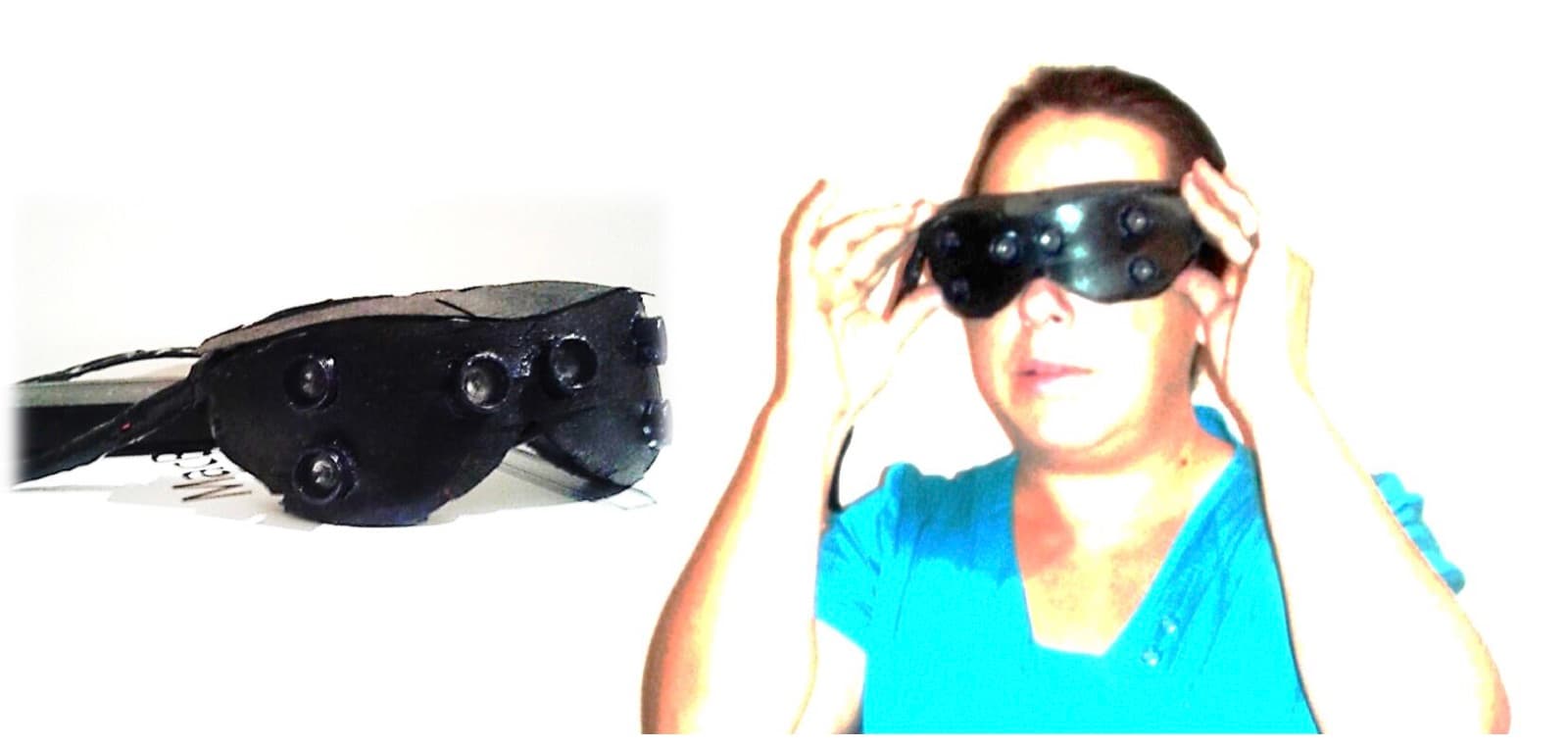
Glasses that gave blind users a haptic sense of the space around them. An array of ultrasonic sensors, small vibrators around the lenses, and a first-year team of nine.
The brief
Engineering Challenges was a first-year design-project course at PUC. I led a team of nine young engineering students through a project that aimed at something that felt out of our league: a wearable that could give blind users a richer sense of the space around them.
Distance, translated to skin
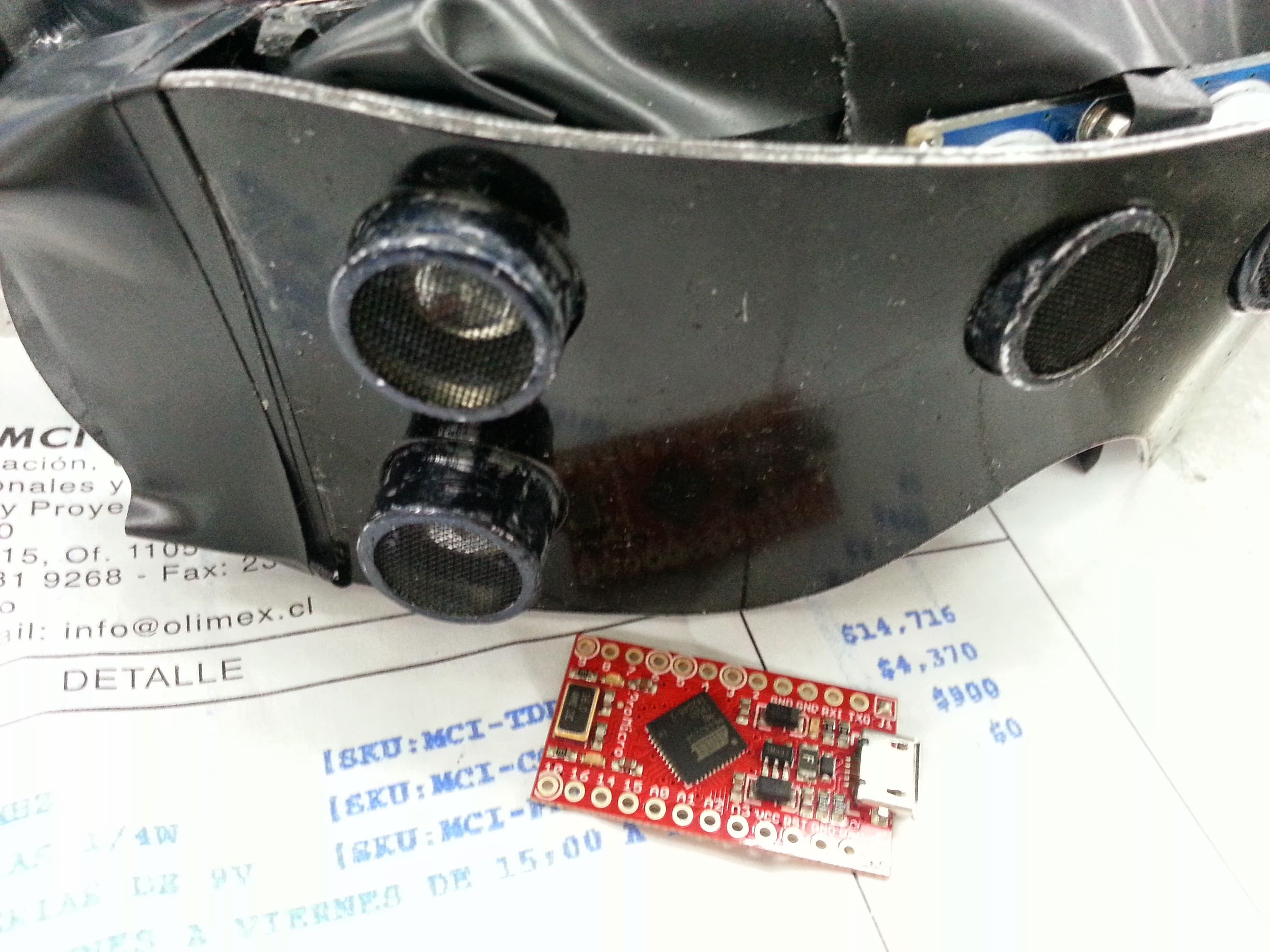
The architecture was simple, which is the only reason a first-year team could ship it. An array of ultrasonic sensors mounted around a pair of glasses sampled distances at different angles. A microcontroller mapped each reading to the intensity of a small vibrator placed at an intuitive position on the frame. Closer object, stronger buzz. Several sensors firing at once gave a low-resolution but real haptic picture: an obstacle near the face, a wall on the right, an opening ahead.
We started on paper, moved through a mockup built with a Lego ultrasonic sensor so we could feel the idea before committing to it, then built our own MVPs and put them on people. The iteration that mattered was that last step: testing with real users and adjusting to what they told us.
What the project taught
Two things stuck. The first was that an accessible device only works if you build it with the people who would use it, not for them. The second was that leading nine young students through a hardware project is its own engineering problem: keeping nine sets of hands moving in the same direction. It was the first time I had to figure that out.